


The International Rugby Board has published its annual statistical analysis of the Six Nations. Scott Johnson would have us believe statistics are like bikinis in that it shows a lot but not the whole thing. That may be so but they show enough to give you a good idea of the appeal of what lies beneath.
The report highlights a further drop in the number of tries scored in the tournament. It may be stating the obvious but the 37 tries scored this year is the lowest since the sport turned professional in 1995. The number of penalties scored continues to rise with an average of 6.3 per match being the highest since the Five Nations restarted after the Second World War.
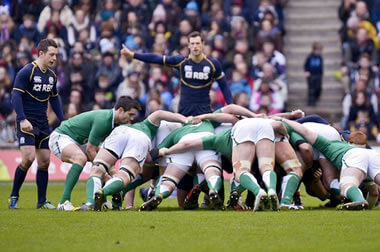
A large part of the report is taken up with analysis of the scrum. There’s a lot of hand wringing in the world of rugby at the moment with many saying something has to be done but a lack of suggestions about what that something might look like. The key message of this report is that it mainly appears to be an issue in games between Tier One nations and mainly one affecting those in the Northern Hemisphere.
The statistics show that England and Wales seem to be trying to win penalties and free kicks from scrums rather than going for possession. Both obtained the ball from their own scrum just 13 times each in the whole tournament but won 37 penalties and free kicks between them. This is contrasted with matches in the 2012 Rugby Championship (the old Tri-Nations) where the scrum was more often a source of possession than points. England and Wales failed to score a try from scrum possession however it produced a total of 47 points for New Zealand and Australia.
The report does not say that England and Wales are deliberately trying to win penalties in this way. The report does not say they are cheating and employing dark arts to con referees. The report merely sets out the facts which are repeated here from which you may reach your own conclusions.
Having said that Scotland were the only other side who failed to score a try from scrum possession but for very different reasons. Scotland had lowest success rate in the scrum only winning 70% on their own put in.
As might be expected the statistics for Scotland are a mixed bag. The team scored five tries from inside their own half (England and Ireland scored none) but seven of the nine tries conceded came in the second half. Scotland had the highest success rate from place kicks but conceded most of their tries by kicking to the opposition (four).
Overall the statistics point to what we all suspected. Scotland were going for territory through the boot. They had the lowest passing rate of any team in the tournament with passing an average of 75 times a match with both Centres making a combined total of only fifteen passes across the whole tournament. They also had the highest kicking rate in open play kicking once for every 30.5 seconds of possession a whole ten seconds behind the next closest team (England).
It wasn’t all bad news at the set piece though with Scotland contesting more line outs than any other side, stealing more ball and scoring three tries. Scotland and Ireland were the only teams not to concede penalties from a throw in.
Scotlands tries came from:
- 3 from lineout
- 1 from opposition kick
- 3 from turnover
Scotland conceded tries:
- 2 from lineout
- 1 from scrum
- 4 from kicking to opposition
- 2 from turnovers
The pick of the rest of the report doesn’t make for great reading from a Scottish perspective. They had the lowest ruck/maul success rate winning 91% compared with 93% for England and 96% for Wales. They won only 62% of opposition restarts and most of the penalties conceded came from the tackle/ruck (43%) and scrum (31%). Still only two yellow cards but then Nick De Luca was injured.
So there we have it. A full and frank assessment of Scotland’s bikini although a mankini might be a more appropriate analogy in the circumstances. It’s not a pretty sight and only the brave might dare to think about what might lie beneath.